Acoustics guide
Soundproof windows? How sound insulation really works in Riyadh homes
Ring roads, construction sites and busy streets are part of life in a growing city like Riyadh. No window is truly soundproof, but the right glass, frame and installation can turn a noisy room into a quiet one. Here is how sound insulation works and what to ask for.
Published by Alfa Aluminium · · Updated · 6 min read
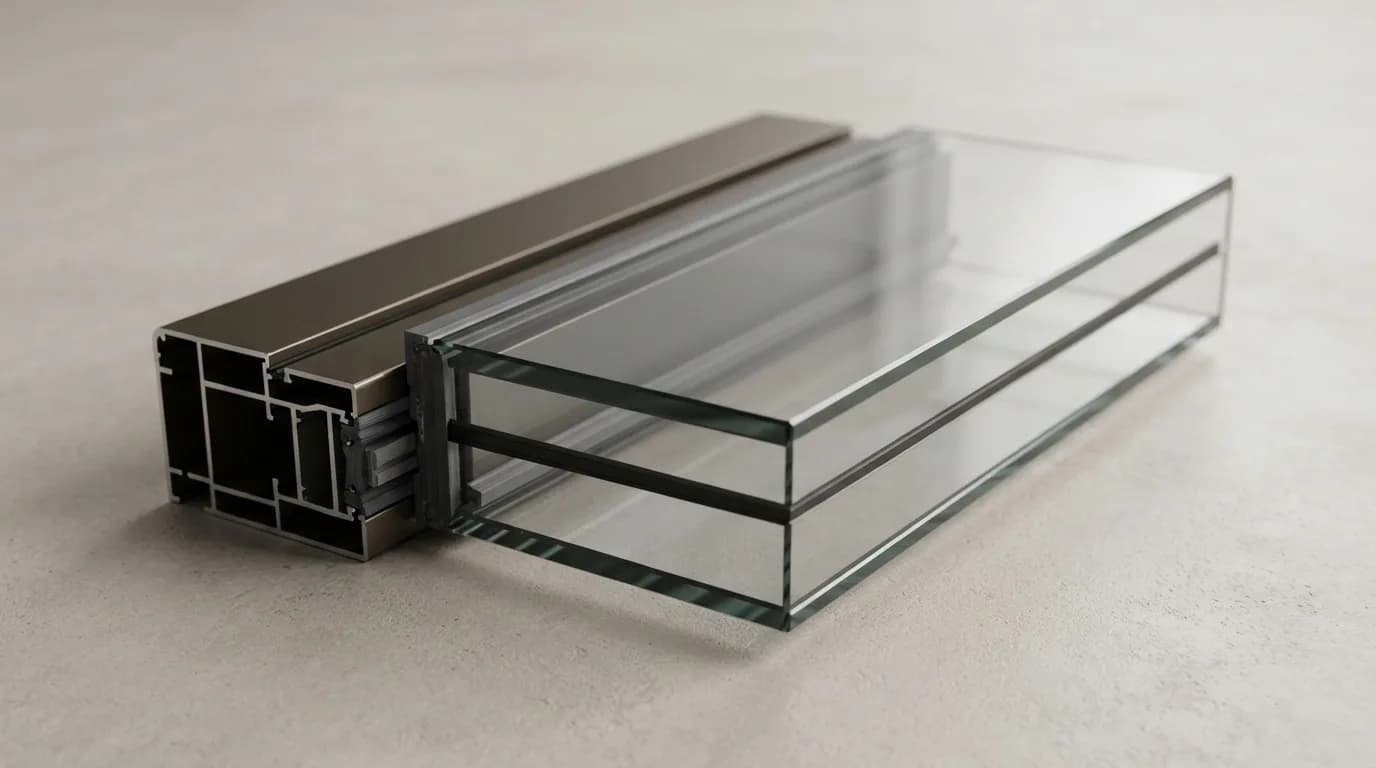
How sound insulation is measured
Sound is measured in decibels (dB), a logarithmic scale, so a difference of a few decibels matters more than it looks.
Windows and glass are rated in the laboratory with the weighted sound reduction index, Rw, defined in ISO 717-1. It summarises how much sound the element blocks across the frequencies people hear. Two corrections are often shown next to it: C for mid- and high-frequency noise such as speech, and Ctr for low-frequency noise such as road traffic. A value written as Rw (C; Ctr) = 33 (−1; −5) dB means the glass gives about 28 dB against typical traffic noise.
What makes glass block sound
- Mass: heavier, thicker glass blocks more sound.
- Unequal panes: two panes of the same thickness resonate at the same frequency and let that sound through. Pilkington notes that mixing glass thicknesses improves performance.
- Acoustic laminated glass: two panes bonded with a special soft PVB interlayer. The interlayer damps vibration and shifts the resonant frequency. In Saint-Gobain's published table, replacing the 12.8 mm ordinary laminated pane in a 10 mm + 16 mm argon + 12.8 mm unit with the same thickness of its acoustic laminate raises the rating from Rw 40 dB to Rw 44 dB.
- The cavity: in common insulated glass units, changing the cavity width has little acoustic effect. Large gaps of 60 mm or more, as in secondary glazing, are a different case.
- Gas fill: Pilkington states that air, argon and krypton make no acoustic difference. Argon helps thermal insulation, not sound.
Published examples
Manufacturers publish tested values for specific build-ups. The figures below show how the rating rises as the panes become heavier, unequal and laminated. The Saint-Gobain values are laboratory values for glass alone, and the VELUX value is for a typical roof window; none is a measurement of a window installed on site.
| Glass build-up | Rw (C; Ctr) | Approx. against traffic (Rw + Ctr) | Source |
|---|---|---|---|
| 4 mm + 16 mm cavity + 4 mm | 32 dB | Not stated | VELUX (roof window) |
| 6 mm + 16 mm argon + 6 mm | 33 (−1; −5) dB | 28 dB | Saint-Gobain |
| 10 mm + 16 mm argon + 12.8 mm laminated | 40 (−1; −4) dB | 36 dB | Saint-Gobain |
| 12.8 mm laminated + 16 mm argon + 8.8 mm acoustic laminated | 48 (−2; −6) dB | 42 dB | Saint-Gobain |
The frame and installation matter as much as the glass
Sound travels through the easiest path. A 40 dB glass unit in a window that does not seal properly will perform like a much weaker window. The complete opening has to be airtight.
- Opening type: casement and tilt-and-turn sashes close onto compression gaskets and usually seal more tightly than sliding sashes. Where large sliding doors are needed, discuss lift-and-slide systems and their seals.
- Gaskets and hardware: multi-point locking pulls the sash evenly onto its gaskets. Worn or badly adjusted hardware leaves gaps.
- The perimeter joint: the gap between frame and wall must be filled and sealed, not just covered with trim.
- Other openings: shutter boxes, AC penetrations and vents near the window can carry noise past an excellent window.
How quiet is quiet enough?
The World Health Organization's 2018 environmental noise guidelines for Europe recommend keeping road traffic noise below 53 dB as a day-evening-night average and below 45 dB at night, because higher exposure is linked to health effects such as sleep disturbance. These are outdoor exposure levels, and a good façade helps keep indoor levels well below them.
Laboratory Rw values are measured under ideal conditions. Installed performance is usually lower because of joints and the surrounding wall. For bedrooms on very busy roads, near airports or for home cinemas and majlis rooms with strict targets, an acoustic consultant can measure the site noise and set a target for the façade.
Checklist for a quiet bedroom in Riyadh
- Tell your supplier which rooms face the noise and what the noise is: road traffic, construction or neighbours.
- Ask for Rw and Ctr values for the proposed glass build-up, not just “acoustic glass”.
- Specify acoustic laminated glass and unequal panes for the noisiest elevations.
- Prefer casement or tilt-and-turn sashes in bedrooms where quiet matters most.
- Inspect the installation: sealed perimeter joints, even gasket contact and correctly adjusted hardware.
- Combine acoustic and thermal performance in the same unit: a laminated pane can be combined with a Low-E or solar-control coating.
Sound and heat: one specification, two goals
Thermal insulation and sound insulation are different problems with some shared solutions. Airtight seals help both. Argon and Low-E coatings help heat but not sound. Laminated acoustic glass helps sound and, as a safety glass, also holds together if it breaks. Read more about the thermal side in why insulation matters in Saudi Arabia, and see our acoustic and airtight openings for project planning.
Need quieter rooms?
Tell us which rooms face the noise and send your opening sizes. The Alfa Aluminium team in Riyadh can propose acoustic glass and window systems for your project.
Every installation is backed by our comprehensive 5-year warranty on aluminium, glass units, hardware and weather sealing. Terms apply.
Plan acoustic windowsRelated pages
Sources
- Saint-Gobain Glass UK — STADIP SILENCE acoustic laminated glass (Rw, C, Ctr table)
- VELUX — Acoustics: evaluation and measurements (Rw of a typical roof window with 4-16-4 glazing, C and Ctr)
- Pilkington — Noise control FAQs
- World Health Organization — Environmental noise guidelines for the European Region (2018)
- Hearing Review — WHO releases new noise exposure guidelines for Europe (road traffic 53 dB, 45 dB at night)